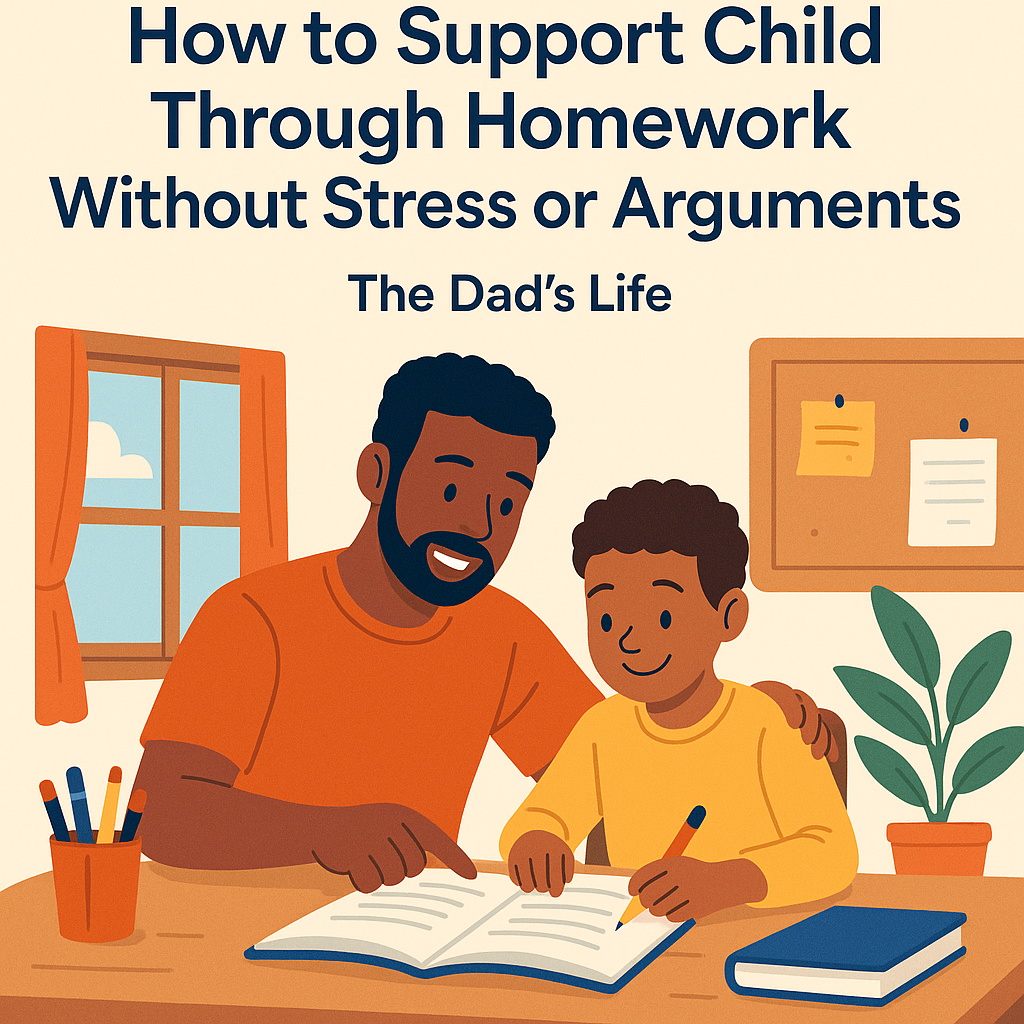
How to Support Your Child Through Homework Without Stress or Arguments
Homework is one of those everyday parenting moments that can quickly turn into frustration — for both you and your child. You sit down to help, but they’re tired… or distracted… or struggling… or melting down because they “can’t do it”.
Whether you’re a full-time dad, a co-parenting dad, or juggling long workdays, helping your child with homework doesn’t need to become a battle. With a few calm routines and the right environment, homework can actually become a positive, connecting part of the day.
This guide gives you practical ways to support your child’s learning with patience, warmth, and confidence — even if you don’t consider yourself “good at school stuff”.
1. Create a Calm Homework Routine (Not a Surprise)
Children feel safer and work better when they know when homework happens.
Try one of these:
- right after school, after a snack
- after 20–30 minutes of play
- after dinner, before screen time
- the same time each weeknight
Consistency reduces resistance.
A calm routine builds cooperation.
You can use your Planning Hub to set the homework slot each day so both you and your child know what to expect.
2. Set Up a Homework Space They Can Rely On
A child works best when they have a physical space for learning.
It could be:
- a small desk in their room
- a corner of the living room
- the kitchen table
- a fold-out table kept in a cupboard
What matters most is:
- it’s quiet
- it’s comfortable
- the lighting is soft
- they have the things they need (pencils, rubber, paper, ruler, etc.)
This space doesn’t need to be fancy — just theirs.
A designated area removes distractions and gives them a sense of control.
3. Start with Connection, Not Correction
Before diving into the worksheet, take 30 seconds to connect:
- “How was your day?”
- “Do you want to work together or independently?”
- “Is anything worrying you about today’s homework?”
Connection calms the nervous system.
A calm child learns better, listens better, and gets less frustrated.
4. Break Tasks Into Small, Achievable Steps
If your child feels overwhelmed, break the homework down:
- “Let’s do the first question together.”
- “How about we set a timer for 5 minutes?”
- “Let’s just read the first paragraph.”
- “Finish this bit, then have a 1-minute break.”
Small steps build confidence quickly.
This is a great place to use the Life Simulator — track their “Homework Win” each day to celebrate effort, not perfection.
5. Use Calm, Encouraging Language
Your tone matters more than the instructions.
Try saying:
- “Let’s figure this out together.”
- “I can see you’re trying — that’s brilliant.”
- “It’s okay if it feels hard, we’ll go slowly.”
- “You don’t need to be perfect, just try your best.”
Avoid:
- “You should know this.”
- “It’s easy.”
- “We’ve done this before!”
- “Stop messing about.”
Encouragement increases motivation.
Pressure shuts children down.
6. Give Them Short, Positive Breaks
Children have limited focus. They need time to reset.
Try:
- a sip of water
- a stretch
- a silly joke
- a high-five
- looking out the window
- taking three deep breaths together
Tiny breaks prevent meltdowns and arguments.
7. Let Them Try First Before Stepping In
If you jump in too quickly, children stop thinking for themselves.
Try:
- “What do you think the answer could be?”
- “How did your teacher explain this?”
- “Talk me through what you’ve tried.”
Support, don’t take over.
You’ll be amazed how much they can do when they believe they can.
8. Celebrate Effort — Not Accuracy
Your child needs to know:
- mistakes are okay
- effort is positive
- learning takes time
- you’re proud of their determination
Praise things like:
- staying focused
- trying again
- reading carefully
- asking for help
- being patient
This builds long-term confidence and reduces fear of trying.
9. Keep Screens and Phones Out of Reach
Screens easily derail homework sessions — even for older children.
Try:
- silent mode
- face-down phones
- TV off
- tablets away unless used for learning
A distraction-free environment cuts homework time in half.
10. End with Something Positive
After homework, try:
- a hug
- a short play
- a walk
- a snack
- some relaxed time together
This helps your child associate homework with calm, connection, and support — not stress.
Use your Playbook to store successful homework strategies and routines you want to repeat.
Final Thought
Homework isn’t just about schoolwork — it’s about your relationship with your child.
By creating a calm space, using gentle language, building predictable routines, and encouraging effort, you’re giving your child something far more valuable than completed worksheets:
You’re giving them confidence, stability, and the belief that they can handle challenges — because Dad believes in them.
Supporting your child doesn’t require being an expert in maths or English.
It requires patience, presence, and small steps — day by day.
And you’re already doing those things, simply by showing up.