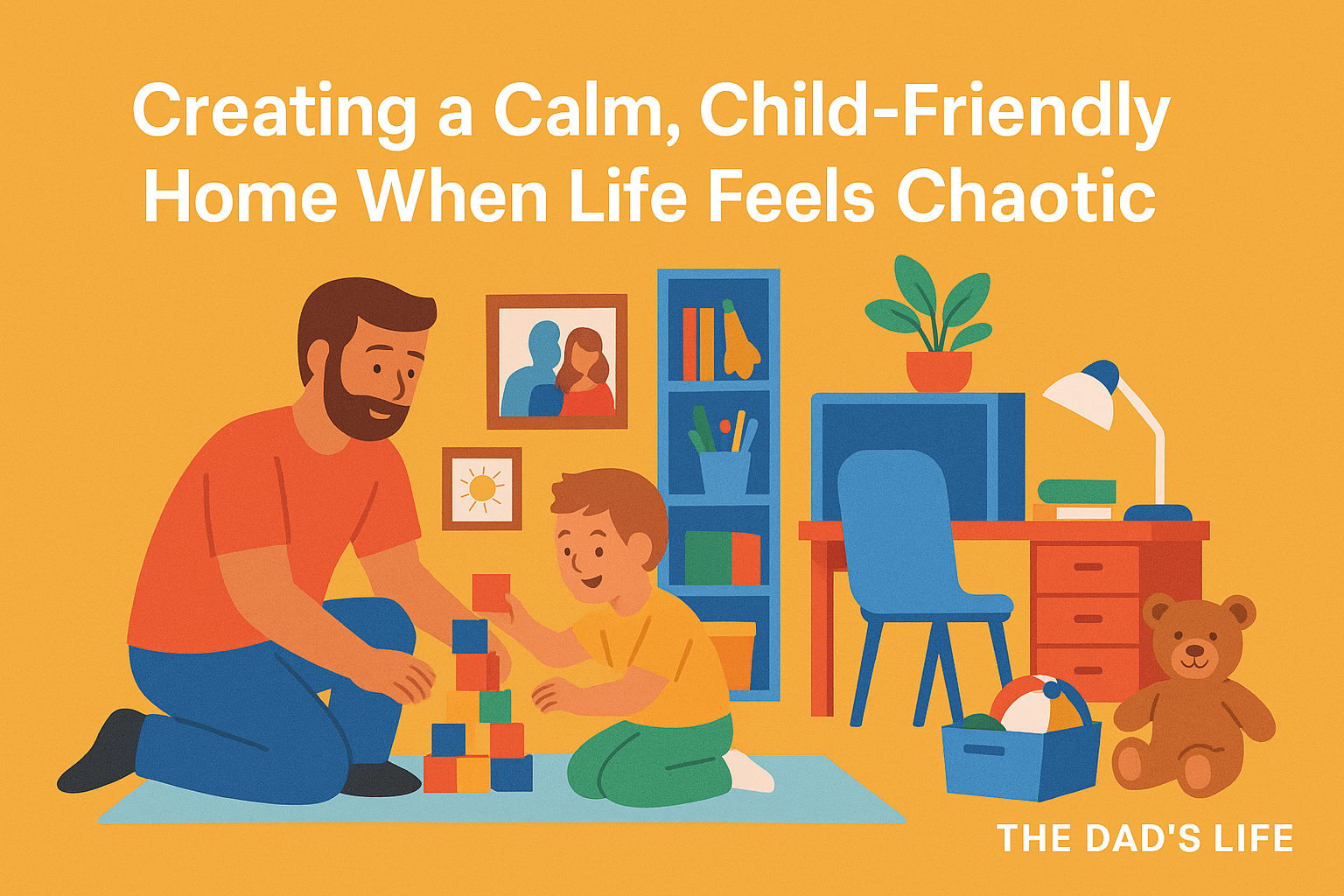
Creating a Calm, Child-Friendly Home When Life Feels Chaotic
A calm home doesn’t mean a perfect home.
It means a space where your child feels safe, welcome, understood, and able to be themselves.
For dads — whether you’re single, co-parenting, full-time, part-time, or navigating stressful routines — your home can become the steady, grounding place your child looks forward to. Even if life feels chaotic outside, your home can feel peaceful inside.
This post gives warm, practical ways to create a home environment that supports emotional safety, healthy habits, and joyful memories, even during difficult chapters.
It also ties naturally into tools like your Planning Hub (for managing routines) and Life Simulator (for tracking daily home habits).
Let’s make your home a calm anchor for your children — and for you.
1. Start with Emotional Calm, Not Perfection
A calm home isn’t about spotless floors or perfectly folded laundry.
It’s about the feeling inside the home.
Try creating:
- gentle lighting
- soft music
- tidy “zones” rather than tidy whole rooms
- a slower pace during evenings
- a predictable bedtime routine
Children feel safe when the environment feels steady, not perfect.
2. Create Spaces Where Your Children Can Play Freely
Play is how children explore, process emotions, and connect with the world.
Make space for it:
- a corner of the living room with a small toy box
- a shelf with colouring books, Lego, or puzzles
- a basket filled with soft toys
- a foldable mat or rug designated for play
You don’t need a huge house — just dedicated pockets of space where kids know “This is where I can play.”
This reduces mess stress and gives children a sense of ownership and comfort.
3. Make Sure They Know Where Their Toys Live
Children thrive when they know:
- where their toys go
- where their books are
- where games and crafts are kept
It helps them feel organised and in control, and it encourages independence.
Try simple storage:
- labelled boxes
- baskets
- a small cube shelf
- drawers with categories (“cars,” “figures,” “colouring,” “crafts”)
This also helps transitions — from playtime to dinnertime to bedtime — feel calmer.
4. Set Up a Desk or Table for Homework and Projects
Children feel more capable when they have their own little “workspace.”
It doesn’t need to be fancy.
A small desk, kitchen table corner, or fold-out table works perfectly.
Make it inviting with:
- pencils
- paper
- a lamp
- a chair that fits them
- craft supplies (glue, scissors, felt tips, stickers)
This encourages focus, creativity, and confidence — and reduces homework stress for both of you.
Add craft bits too so the creativity can flow freely, anytime.
5. Internet Access — But Safe and Supervised
Kids use technology for:
- schoolwork
- hobbies
- friends
- learning
- games
But safe internet use is essential.
Create a digital-safe setup:
- child-friendly accounts
- parental controls
- time limits
- keeping screens in shared spaces
- talking openly about online behaviour
- using child-safe search modes
Balance is everything: freedom + safety.
Children feel trusted, but also protected.
6. Make Their Bedroom a Safe, Comforting Space
A child’s bedroom should be:
- comfortable
- warm
- personal
- sensory-safe
Small touches make a big difference:
- soft bedding
- fairy lights or a soft lamp
- their favourite teddies
- shelves for their books
- a calm colour palette
- blackout curtains
- a place for their clothes so they know where things are
If life outside feels unsettled, a peaceful bedroom becomes a sanctuary.
7. Keep the House Stocked With Simple, Comforting Food
Food brings security.
Having:
- fruit
- snacks
- yoghurt
- simple breakfast foods
- easy dinners
- sandwiches
- pasta
- juice or squash
- treats for special moments
…helps children feel cared for and grounded.
It also takes pressure off you — no last-minute stress about meals.
You can add weekly food essentials into your Planning Hub to keep things consistent.
8. Display Photos of Your Family Around the Home
This is powerful — especially during co-parenting or separation.
Photos help children feel:
- connected
- loved
- part of something
- proud of their family
- rooted in memories
You can display:
- family days out
- birthdays
- drawings
- notes they’ve written
- pictures of them with both parents (if appropriate)
Children look at these photos more than you realise, especially when they need comfort.
9. Build Predictable Household Routines
Chaos often comes from uncertainty.
Routines create calm.
Try:
- a consistent morning routine
- predictable meal times
- a nightly tidy-up
- weekend traditions
- set bedtimes
- a weekly house-reset day
These routines can be organised through your Planning Hub, making them easy to manage.
10. Make Your Home Feel Like “Their” Home
All children need to feel like they truly belong in your home — especially in co-parenting situations where they move between houses.
Little things help:
- a drawer just for their clothes
- their own toothbrush and toiletries
- a favourite blanket
- toys that stay in your home
- space in the wardrobe
- books next to their bed
- a shelf or spot that’s theirs
The message becomes simple:
“This is your home too.”
Final Thought
A calm, child-friendly home doesn’t require money, perfection, or a big space.
It requires intention.
Every gentle touch — fair lighting, tidy zones, soft routines, a stocked cupboard, a welcoming bedroom, accessible toys — tells your child:
“You’re safe. You belong here. You’re loved.”
And that sense of security shapes everything:
- behaviour
- confidence
- sleep
- school life
- emotional resilience
- your bond
The Dad’s Life is here to help you create a home that feels grounded, warm, and stable — even when life outside feels chaotic.
You’re building something your children will remember forever.